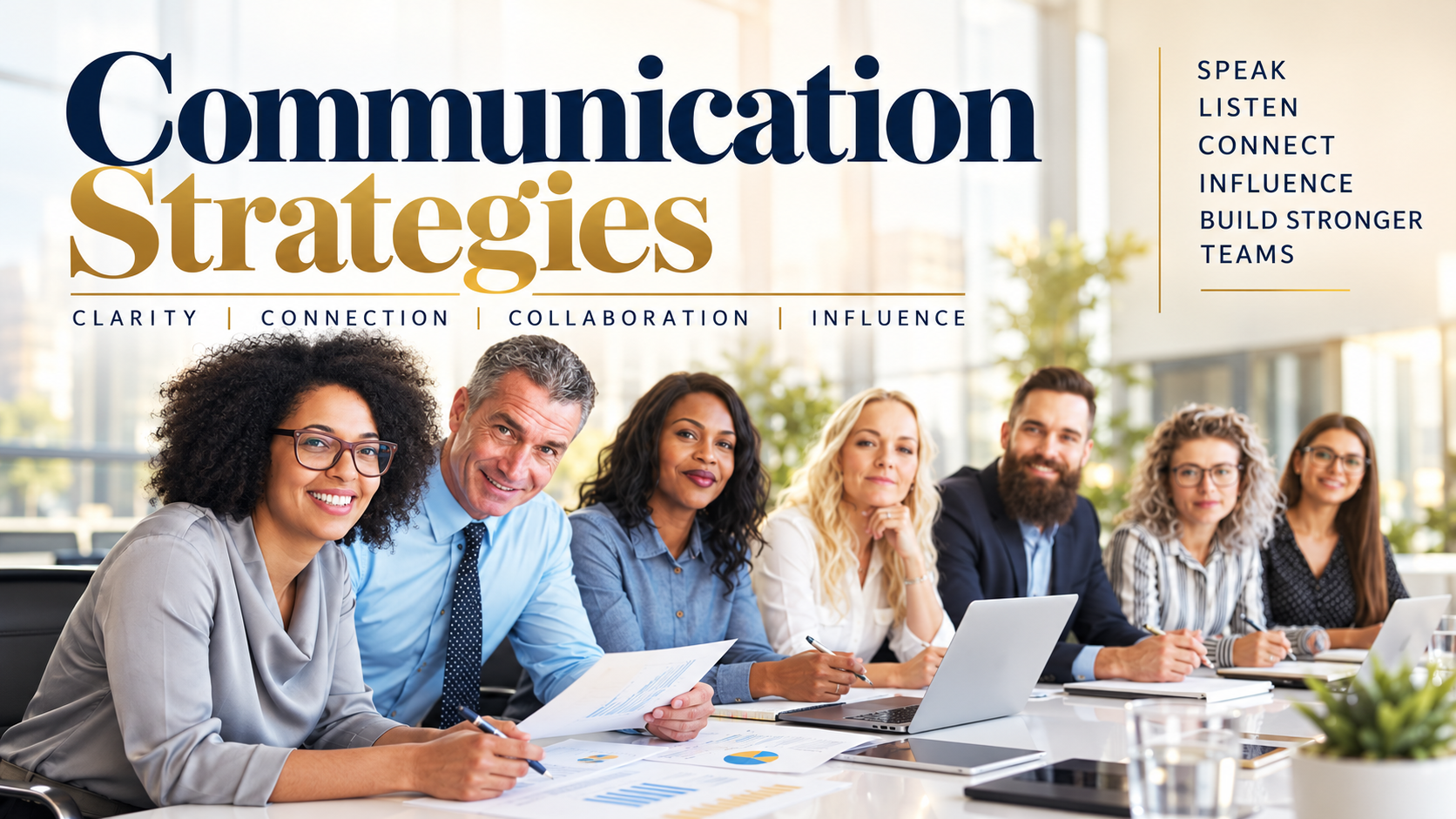
Communication Strategies
Strengthen the way you communicate, connect, and influence others. This training helps participants adapt their communication style, listen more effectively, deliver clear messages, and navigate challenging conversations with greater confidence and impact.
Communicate Clearly. Connect Intentionally. Increase Your Impact.
Effective communication is one of the most important skills for building strong relationships, creating alignment, and achieving results in the workplace.
Communication Strategies is an interactive training designed to help participants strengthen the way they communicate across different situations, audiences, and professional relationships.
Through practical discussions, role-playing activities, and real-world examples, participants will explore how communication style, active listening, emotional intelligence, tone, and non-verbal cues influence how messages are received.
The training helps participants communicate with greater clarity and confidence, adapt their approach to different audiences, ask better questions, provide constructive feedback, and navigate difficult conversations more effectively.
Participants will also learn how intentional communication can improve collaboration, strengthen relationships, reduce misunderstandings, and increase influence across teams and organizations.
By the end of the training, participants will have practical strategies they can use immediately to communicate more effectively in both everyday and challenging workplace interactions.
What You'll Learn
- Understand the principles of effective workplace communication.
- Recognize different communication styles and how they affect interactions.
- Adapt communication approaches to different audiences and situations.
- Develop clearer and more concise messaging.
- Strengthen active listening and questioning skills.
- Use non-verbal communication more intentionally.
- Apply emotional intelligence to workplace conversations.
- Provide constructive feedback with greater confidence.
- Navigate difficult conversations more effectively.
- Reduce misunderstandings and improve collaboration.
- Strengthen personal influence through intentional communication.
- Create a personal action plan for improving communication effectiveness.
Training Program
- Understanding Effective Communication
- Recognizing Different Communication Styles
- Adapting Your Message to Your Audience
- Communicating with Clarity and Confidence
- Active Listening for Better Understanding
- Asking Powerful and Purposeful Questions
- Understanding Non-Verbal Communication
- Emotional Intelligence in Communication
- Giving and Receiving Constructive Feedback
- Navigating Difficult Conversations
- Managing Misunderstandings and Conflict
- Building Influence Through Communication
- Creating a Communication Action Plan
Training FAQ
This training is designed for professionals, managers, supervisors, emerging leaders, team leaders, and employees who want to communicate more clearly and effectively in the workplace.
The training covers communication styles, active listening, clear messaging, questioning techniques, non-verbal communication, feedback, emotional intelligence, and difficult conversations.
Yes. Participants will learn practical techniques for preparing for, navigating, and responding to challenging workplace conversations with greater confidence and professionalism.
Yes. Stronger communication can reduce misunderstandings, improve collaboration, build trust, and strengthen working relationships across teams.
Yes. Participants will explore different communication styles and learn how to adapt their approach to different people and situations.
Yes. The program may be adapted to reflect your organization's communication challenges, leadership expectations, team dynamics, and workplace needs.
Yes. The program may be delivered virtually, in person, or as an interactive workshop depending on availability.
Get a Preview of the Training
Discover practical communication strategies for adapting your message, listening more effectively, handling difficult conversations, and building stronger professional relationships.
Effective communication is not only about what you say, but how well you create understanding, connection, and action.Checree Bryant