
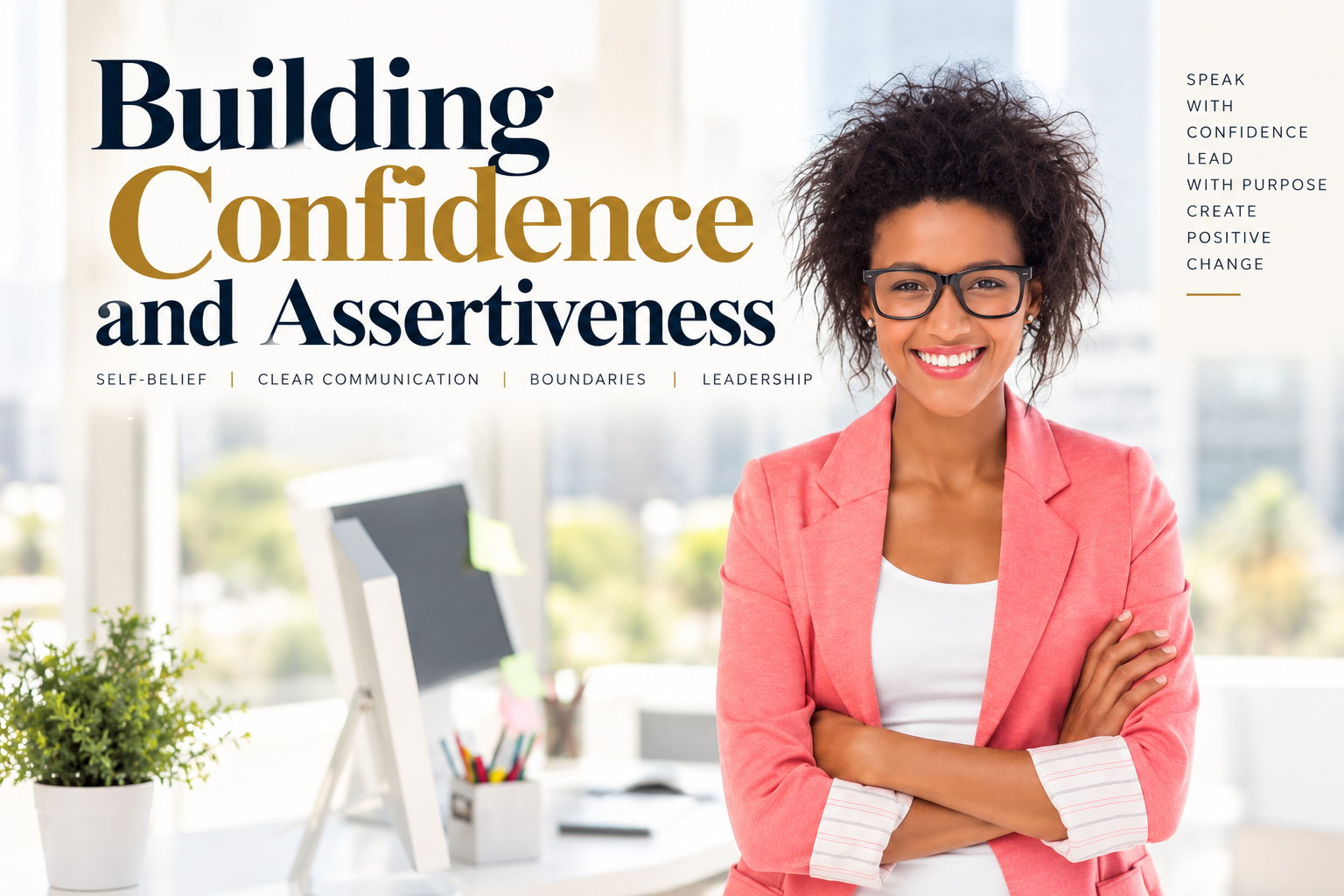
Building Confidence and Assertiveness
Build greater confidence and communicate with clarity, courage, and respect. This training helps participants overcome self-doubt, strengthen assertive communication, set healthy boundaries, and develop a more confident presence in both personal and professional interactions.
Communicate with Confidence. Set Boundaries. Show Up with Greater Impact.
Confidence and assertiveness are essential skills for communicating effectively, building healthy relationships, and navigating personal and professional challenges with greater clarity.
Building Confidence and Assertiveness is an interactive training designed to help participants strengthen self-awareness, overcome self-doubt, and develop practical techniques for communicating their needs, ideas, and boundaries with confidence and respect.
Through engaging discussions, practical exercises, and real-world application, participants will explore the difference between passive, aggressive, and assertive communication. They will learn how to express themselves clearly, manage difficult conversations, establish healthy boundaries, and build stronger interpersonal relationships.
The training also focuses on the connection between self-confidence, emotional intelligence, communication, and personal presence. Participants will identify barriers that may be limiting their confidence and develop strategies for showing up more intentionally in everyday interactions.
By the end of the training, participants will have practical tools for communicating with greater confidence while maintaining professionalism, respect, and authenticity.
What You'll Learn
- Understand the principles of confidence and assertive communication.
- Recognize the difference between passive, aggressive, and assertive behaviors.
- Identify personal barriers that may be limiting self-confidence.
- Develop practical strategies for overcoming self-doubt.
- Communicate needs, ideas, and expectations with greater clarity.
- Set and maintain healthy personal and professional boundaries.
- Use assertive communication during difficult conversations.
- Strengthen self-awareness and emotional intelligence.
- Build stronger interpersonal relationships through respectful communication.
- Create a personal action plan for maintaining confidence and assertiveness.
Training Program
- Understanding Confidence and Assertiveness
- Recognizing Your Communication Style
- The Difference Between Passive, Aggressive, and Assertive Communication
- Identifying Barriers to Self-Confidence
- Building Greater Self-Awareness
- Developing an Assertive Mindset
- Communicating Needs and Expectations Clearly
- Setting Healthy Boundaries
- Handling Difficult Conversations with Confidence
- Building Stronger Interpersonal Relationships
- Creating a Confidence and Assertiveness Action Plan
Training FAQ
This training is designed for professionals, emerging leaders, managers, team members, and individuals who want to communicate more confidently, set stronger boundaries, and develop a more assertive presence.
Assertive communication is the ability to express your needs, ideas, feelings, and expectations clearly and respectfully while also considering the perspectives and rights of others.
No. Assertiveness focuses on clear, respectful, and confident communication. Aggressive communication may disregard the needs or perspectives of others.
Yes. Participants will learn practical strategies for communicating clearly, setting boundaries, and approaching difficult conversations with greater confidence.
Yes. Participants will explore barriers to confidence and develop practical strategies for strengthening self-awareness, personal presence, and confidence in daily interactions.
Yes. The training may be adapted to address specific workplace communication challenges, leadership needs, or team development priorities.
Yes. The program may be delivered virtually, in person, or as an interactive workshop depending on availability.
Get a Preview of the Training
Discover practical strategies for strengthening confidence, communicating assertively, setting healthy boundaries, and navigating everyday interactions with greater clarity and self-assurance.
Confidence grows when you learn to communicate your value, express your needs, and stand in your voice with clarity and respect.Checree Bryant